
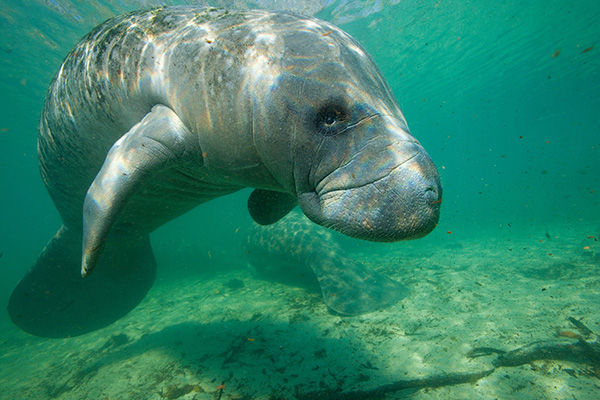
Species Protection

Protecting vulnerable and endangered species that rely on healthy waterways and resilient ecosystems.

Miami Waterkeeper focuses on protecting South Florida’s native ecosystems such as coral reefs, mangroves, wetlands, and seagrasses.

These critical habitats provide ecosystem services such as shoreline protection, wildlife habitat, carbon sequestration, and defense against storm surges. We are so lucky to have amazing natural resources in our backyard!

The Florida Reef Tract is the only nearshore coral reef in the continental United States and the third largest barrier reef in the world. Coral reefs have the highest potential for coastal protection due to their ability to reduce wave heights, averaging a reduction of nearly 70 percent. Without coral reefs, these waves would hit coastlines with high amounts of energy and potentially cause extreme damage. It can pay off to focus on restoring coral reefs for the purposes of flood defense. Coral reef restoration has proven to be highly cost effective when compared to the cost of typical engineered flood solutions such as breakwaters.

In Florida, roughly 469,000 acres of mangrove forests serve as the ultimate multitaskers. In addition to protecting coastal areas of Florida from waves by as much as 20 percent, mangroves also aid in nutrient cycling, carbon sequestration, sediment retention, and provide valuable habitats for marine life. Luckily, in the state of Florida, there are laws protecting mangroves. The law states that mangroves cannot be trimmed below a certain height, effectively protecting them from being cut down completely. 

Mangroves, salt marshes, and seagrasses are the most dominant blue carbon sinks in Florida. Blue carbon refers to organic carbon stored in marine ecosystems over long time spans. Carbon storage in mangroves occurs in all parts of the tree: the roots, leaves, trunks, branches, and soil. The carbon sequestration value of mangrove ecosystems in the Caribbean is $6.7 billion/year. Globally,  mangroves average approximately as much carbon dioxide per hectare as tropical rainforests do. Considering local site conditions, available land, and species already present at proposed restoration sites is critical to restoration success (The Nature Conservancy, 2021). It has been found that older, well-established mangrove communities stored the most organic carbon when compared to middle-aged or younger sites. Greenhouse gas sequestration potential in this region is expected to increase by approximately 2.1 (+/- .5) million tons by 2100 (Dontis et al., 2020). 

Seagrass beds occupy only 0.2 percent of the sea floor, but they account for 10 percent of the ocean’s capacity to store carbon and can capture carbon from the atmosphere up to 25 times faster than tropical rainforests (Fourqurean et al., 2012). However, over 90 percent of seagrass beds have died in parts of Northern Biscayne Bay due to pollution from leaky septic tanks, crumbling sewage infrastructure, stormwater runoff, and excess fertilizer use.

Miami Waterkeeper’s work results in increased clean water, climate change and sea-level rise resiliency, and habitat protection through its work in its three main approaches: science and research, policy and advocacy, and education and outreach. 

We work to protect the wild areas you love by:

Share this campaign

Healthy coral reefs protect our shores, support marine life, and keep our waters thriving.

Explore Related Work

PUBLISHED WORK

in the press

News, science, and stories from the front lines of South Florida’s water.

View all

NOAA Says Port Miami Dredge Disaster For Reef

NOAA Says Port Miami Dredge Disaster For Reef

In a project all but finished, the Army Corps of Engineers has dredged the channels at and leading to Port Miami for nearly two years, but another U.S. government agency says the Corps wreaked environmental havoc in the process. Read full article here.

Read more
PortMiami dredge damages more coral than feds expected

PortMiami dredge damages more coral than feds expected

Jenny Staletovich for the Miami Herald writes: Deepening Port Miami to make way for bigger ships has caused far more damage to rare coral at the bottom of Biscayne Bay than federal wildlife managers originally calculated. Read full article here.

Read more
Yuck! Your Favorite Swim Spot Is a Lot Grosser Than You Realize

Yuck! Your Favorite Swim Spot Is a Lot Grosser Than You Realize

Water is supposed to purify: Taking a shower, washing your face, and staying properly hydrated promote good hygiene and health. But sometimes water is the one that gets dirty. That’s why since 1972, when The Clean Water Act was passed, the U.S. Environmental Protection Agency (EPA) has regulated both water pollution and quality standards in an attempt to keep

Read more

Support our work

We’re committed to transparency, accountability, and maximizing the impact of every dollar entrusted to us. Be part of the change and donate today!
Florida Solicitation of Contributions Registration #CH46021 A copy of the official registration and financial information for Biscayne Bay Waterkeeper (aka Miami Waterkeeper), a Florida-based nonprofit organization, may be obtained from the Division of Consumer Services by calling toll-free 1-800-HELP-FLA (435-7352) within the state or visiting www.800HELPFLA.com. Registration does not imply endorsement, approval, or recommendation by the state.

Social Feed

@miamiwaterkeeper