
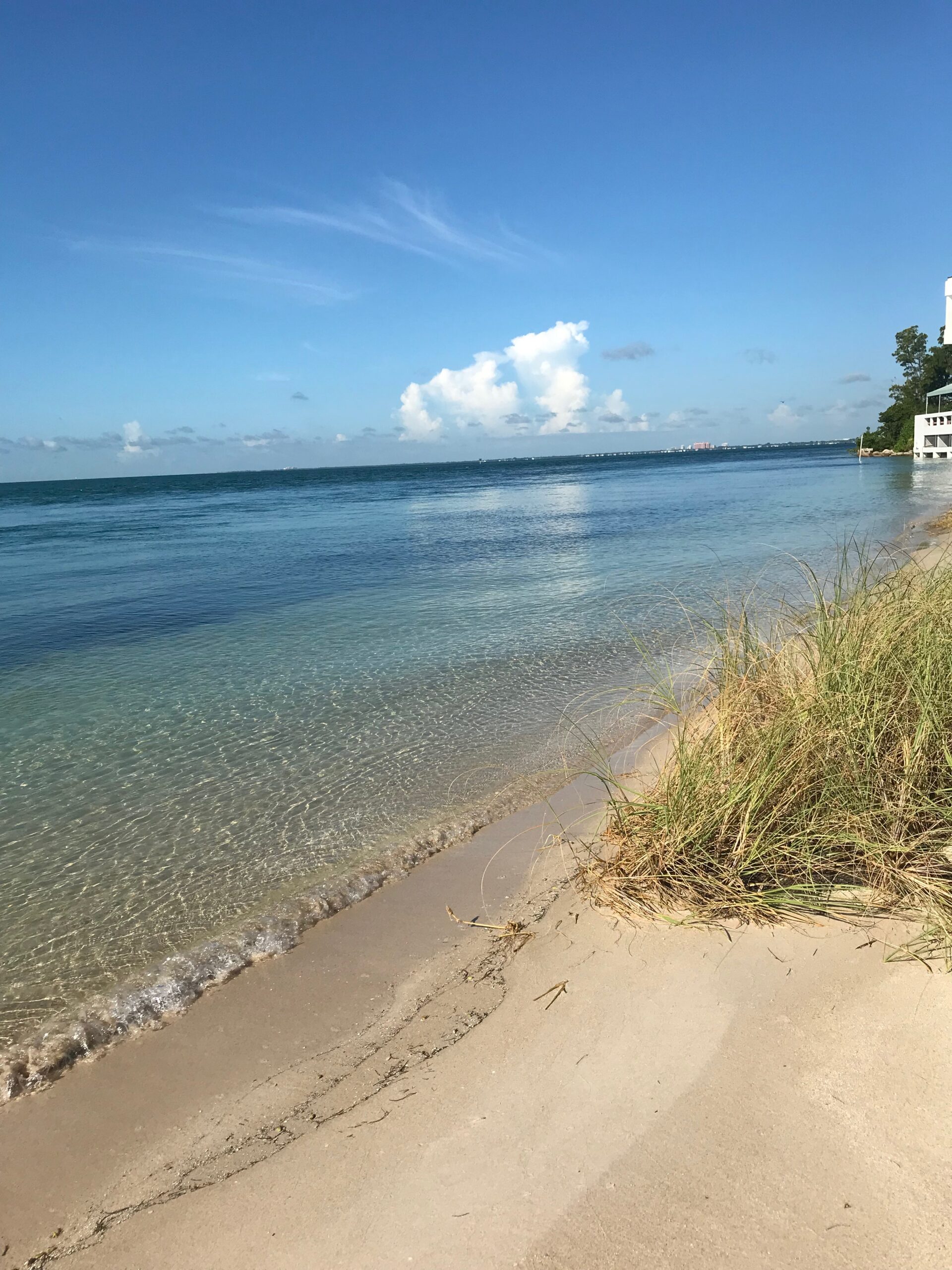
While the water may look beautifully clear and blue, it may also contain microscopic chemicals or pathogens that can be harmful to humans. At Miami Waterkeeper, we routinely check the water for fecal indicator bacteria levels at key recreation areas and publish our results on our free Swim Guide app, on social media, and on our website to keep you informed — ensuring your safety for swimming in your local waterways.

Darwin Beach at the University of Miami Rosenstiel School of Marine and Atmospheric Science, one of the sites Miami Waterkeeper takes water samples from.
Why should I be concerned about Water Quality?
Water quality is a concern because bacteria and viruses associated with the indicators we test for can affect human health, particularly the very young, the elderly, and those with weakened immune systems. Swimming in water with high levels of bacteria can cause illnesses such as:
- gastrointestinal distress
- skin irritation
- irritation of eyes and ears
What are Swim Advisories?
Swim advisories are notices published by the Florida Department of Health to let water users know about water quality. These advisories are based on standards from the Environmental Protection Agency following a series of rigorous studies examining recreational water quality and risk exposure. When you see a swim advisory posted, it is best to adhere to its recommendations. Read more HERE.
What are fecal indicator bacteria (FIB), and what are its sources?
FIBs are bacteria associated with pathogenic bacteria and viruses common in fecal material. They indicate that pathogenic bacteria and viruses could be present, but FIBs do not necessarily cause illnesses. E.coli is the recommended indicator for fresh water; enterococci is recommended for saltwater.
The EPA has set the following standards for water considered safe for swimming:
0-70 cfu/mL enterococci per sample: Safe for swimming
70+ cfu/mL enterococci per sample: Not safe for swimming
Higher FIBs have been demonstrated to occur more frequently at beaches with:
- low wave action
- low slope
- many beachgoers
- many dogs
- many birds
- large volumes of seaweed
- strong winds
- following heavy rainfall
- when sand or sediment has been dispersed and suspended in the water
For more information on our water quality sampling program, click HERE. Miami Waterkeeper will continue to update the public with the results of our weekly water quality sampling efforts — samples are processed Monday and can be accessed by the public Tuesday.
Interested in having all the info in a printable fact-sheet? Click HERE to download and use for your reference.
Click HERE to download the SwimGuide app and HERE to visit the website.

Originally published at https://www.miamiwaterkeeper.org/why_we_sample