
Expansion
In partnership with Earthjustice, the Center for Biological Diversity, and the Diving Equipment & Marketing Association, Miami Waterkeeper submitted comments to the U.S. Army Corps of Engineers highlighting the various ways in which the Port Everglades Expansion Project risks repeating PortMiami’s history with even worse results.
Between 2013 and 2015, amid warnings from scientists and environmental groups like Miami Waterkeeper, the deep dredge construction project at PortMiami killed at least half a million corals, causing irreparable damage to our already imperiled coral reefs. The true damage of the PortMiami project was massively underestimated by the U.S. Army Corps of Engineers and resulted in an Endangered Species Act legal challenge. Miami Waterkeeper’s legal advocacy in PortMiami ultimately resulted in the restoration of 10,000 threatened staghorn corals back onto South Florida’s coral reefs.
In 2016, we sounded the alarm again and initiated a legal challenge calling for better reef protections in the face of the Port Everglades dredging project. Our litigation successfully delayed this project for several years while the Army Corps conducted new environmental analyses related to the project.
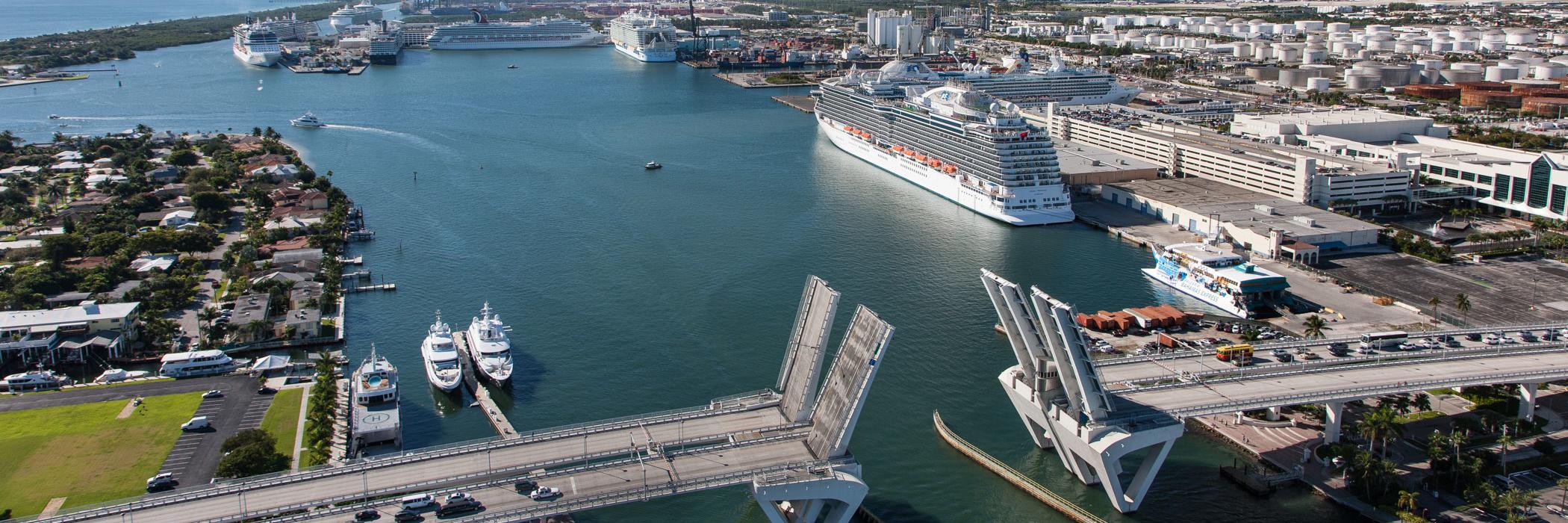
 Port Everglades (Source: Sunny.org Visit Fort Lauderdale)
Fast forward to 2021 and, with only a partial acknowledgment of the destruction caused by the PortMiami expansion, the Corps released those environmental documents. These documents indicated the Corps’ intent to proceed with its Port Everglades expansion project, which requires a period of construction twice as long as PortMiami’s. While the Corps improved its Environmental Impact Statement (EIS) this time around, it is deficient in crucial ways that once again severely underestimate the damage the Project could cause.
The National Environmental Policy Act (NEPA) requires that agencies use a proper baseline when measuring environmental impact. The surveys the Corps is relying on were conducted ten years ago by the same contractor, Dial Cordy, that immensely underestimated the number of corals present at the dredging site at PortMiami. The Miami project also likely contributed to the outbreak of stony coral tissue loss disease (SCTLD) which killed 60% of live coral tissue in Miami-Dade County in only a few years. The Corps has not fully assessed the link between dredging and SCTLD, putting Fort Lauderdale’s coral population at severe risk of an outbreak should the Port Everglades dredging proceed as planned.
If the Project is to move forward, a full assessment of its costs and benefits should be made publicly available. The Corps relies on outdated and flawed cost-benefit analyses based on old estimates of the Port’s economic contribution that were made before PortMiami was completed, therefore overstating the amount of business Port Everglades would generate. Also, the Project’s design has been rendered obsolete by the next generation of shipping vessels, which require channels deeper than the planned 48 feet. That is, by the time this Port Everglades project is complete – the Corps would likely have to turn around and begin dredging all over again. In addition, the Corps has failed to take into account tens of millions of dollars in environmental mitigation costs the dredging would require in order to properly cover the environmental impacts from the project.
The comments that Miami Waterkeeper submitted were based on a 1,725 document. To read the comments in more detail, click HERE
We’ve made it our mission to protect coral reefs from dredging projects in South Florida and we intend to continue that fight! Click here to join our newsletter to get more updates like this one.
Originally published at https://www.miamiwaterkeeper.org/repeating_history_statement_on_port_everglades