
Miami-Dade Plan of Action for Septic Systems

As waters rise, so will the chances of septic system failure in South Florida. Approximately 9,000 septic tanks in Miami-Dade County are currently vulnerable to compromise or failure, according to a new Plan of Action Report issued by Mayor Daniella Levine Cava on December 10, 2020. This report, a follow-up to the 2018 County report on […]

Back

As waters rise, so will the chances of septic system failure in South Florida. Approximately 9,000 septic tanks in Miami-Dade County are currently vulnerable to compromise or failure, according to a new Plan of Action Report issued by Mayor Daniella Levine Cava on December 10, 2020. This report, a follow-up to the 2018 County report on septic tank vulnerability, takes a hard look at Miami-Dade’s septic systems in light of rising sea levels and the known risks septic failure poses to human and environmental health.

Ideally, septic tanks handle waste by expelling liquid into dry soil that filters out any harmful waste before the liquid reaches the aquifer, where our drinking water comes from. However, the ground under us in South Florida is primarily porous limestone – meaning that water moves much more quickly through the ground than in other areas of the country. With rising seas and worsening storms, septic tanks drive more and more waste into the aquifer– threatening our water resources.
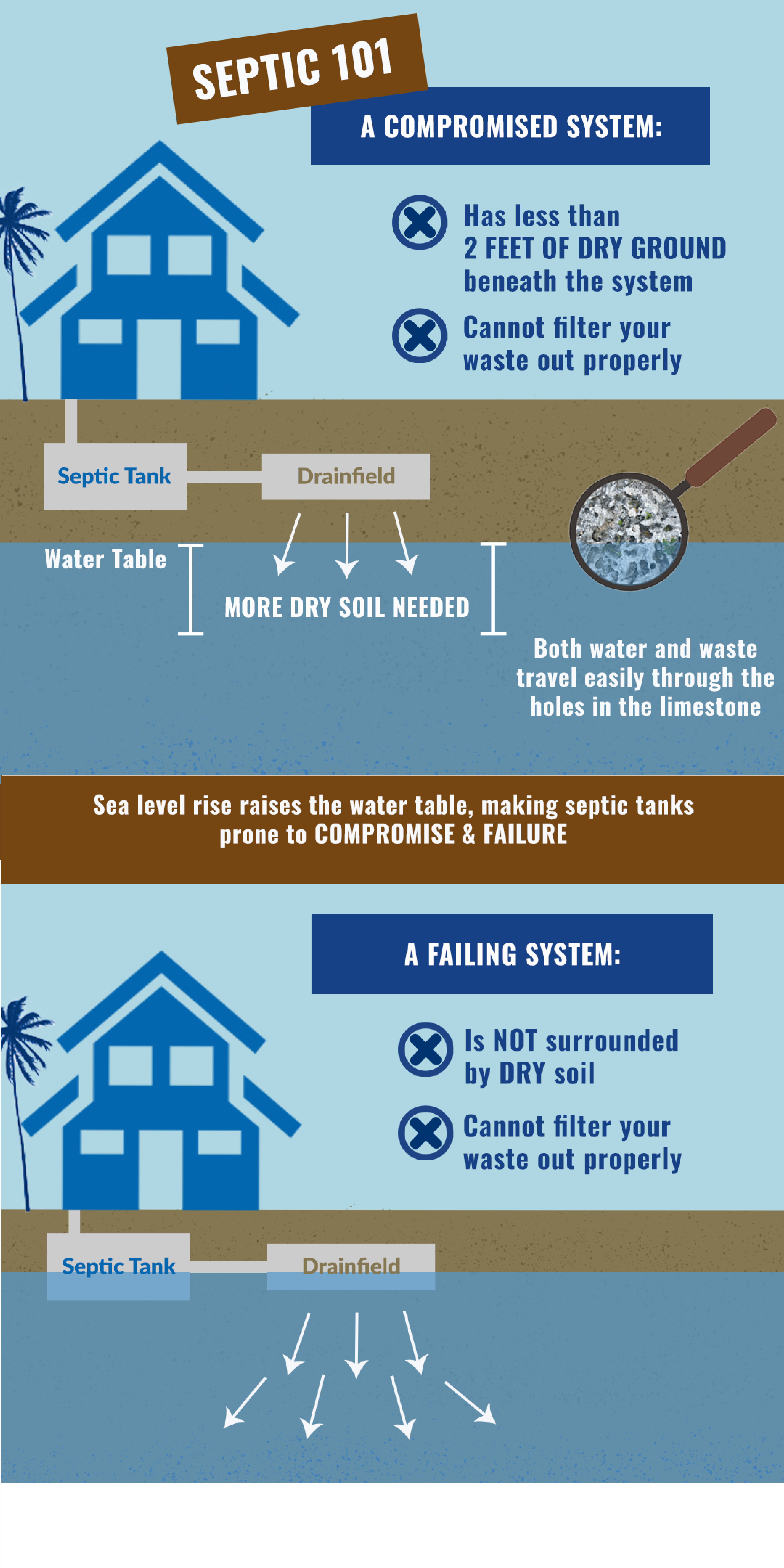
The Biscayne Aquifer and Biscayne Bay, crucial water systems the County report acknowledges as “extraordinarily sensitive,” can be protected by mass conversion from septic tanks to the public sewer system. The report further notes that an additional 13,500 septic tanks would become vulnerable to compromise or failure by 2040. The report recommends immediate conversion of vulnerable tanks near existing sewer infrastructure, and the eventual conversion of all tanks deemed vulnerable by 2040.

But, there’s much more to be done! Visit our Stop Septic Pollution campaign page to learn more about this issue and how you can take policy action to protect South Florida’s water resources from the polluting impacts of septic tanks. 

Originally published at https://www.miamiwaterkeeper.org/miami_dade_plan_of_action_for_septic_systems

Tags:

Get updates about our work

We respect your privacy.

Media Coverage

Stories of Accountability & Recovery

Miami Waterkeeper has been cited by local and national outlets as a trusted source on South Florida water quality, policy, and environmental justice.

The Washington Post

An Army Corps project could wipe out one of Florida’s last thriving coral reefs

March 1, 2026

The Washington Post ran an in-depth feature on the U.S. Army Corps of Engineers’ plans to dredge and widen the shipping channel at Port Everglades —…

Read more

Nautical Voice

Concerns Rise Over Port Everglades Expansion’s Impact on Coral Reefs

January 19, 2026

NV Tech Desk reported on the scientific alarm surrounding the Port Everglades expansion, highlighting a landmark study by NOAA and the Shedd Aquarium that…

Read more

The Invading Sea

Trashing our oceans: Feds plan the biggest permitted coral destruction in US history

January 8, 2026

The Invading Sea, Florida’s dedicated climate journalism outlet, published a stark account of what the Port Everglades dredge proposal actually entails: 400 underwater acres…

Read more

Support our work

We’re committed to transparency, accountability, and maximizing the impact of every dollar entrusted to us. Be part of the change and donate today!

Florida Solicitation of Contributions Registration #CH46021 A copy of the official registration and financial information for Biscayne Bay Waterkeeper (aka Miami Waterkeeper), a Florida-based nonprofit organization, may be obtained from the Division of Consumer Services by calling toll-free 1-800-HELP-FLA (435-7352) within the state or visiting www.800HELPFLA.com. Registration does not imply endorsement, approval, or recommendation by the state.