
Biscayne Bay was once an ecological and aesthetic jewel comprising lush seagrass meadows, tangled mangrove forests, and a myriad of diverse marine life. Sadly, the Bay has reached a tipping point; approximately 80 percent of seagrass coverage is missing, and the compounding effects of human pollution are undeniable.
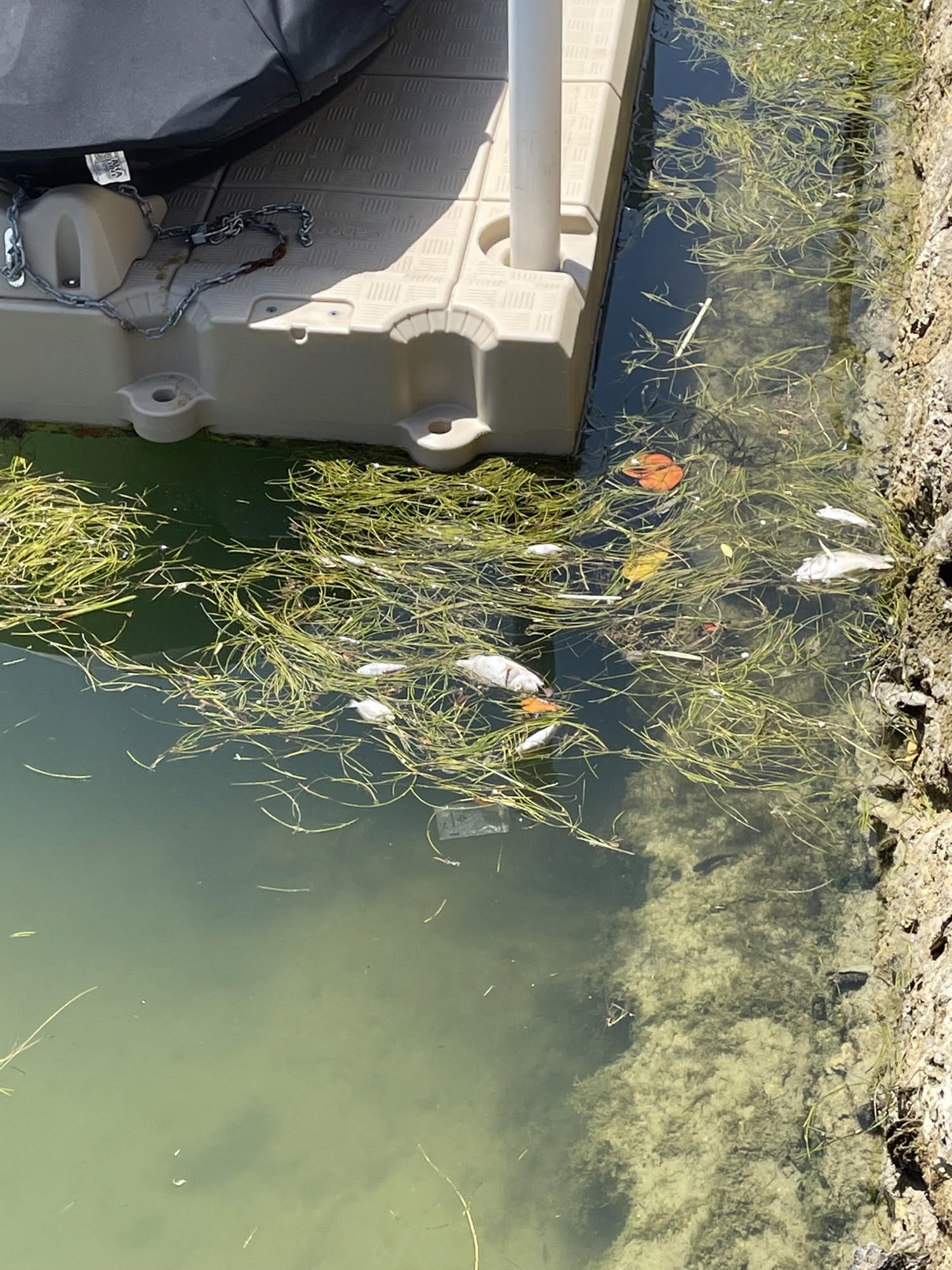
On Labor Day weekend, and approximately one year after last year’s August 2020 fish kill, Miami Waterkeeper received several reports of dead and dying fish throughout the northern Biscayne Bay area. This year’s incident observed about 150 dead fish, which is much smaller in comparison to last year’s incident that killed over 27,000 fish.
Days before both fish kills, the Bay faced a combination of high temperatures and low winds. These conditions contribute to low oxygen levels in the water that are stressful for marine life. The Bay can sustain these conditions, but the abundance of nutrient pollution through the runoff of septic systems, sewage spills, stormwater, and fertilizers are pushing its limits. These excess nutrients, combined with the drastic loss of oxygen-producing seagrass beds, plunge dissolved oxygen levels to fatal conditions during the hot, still weeks of deep summer.

Dead fish at Biscayne Point on Sept. 7 Photo received from a pollution report.
We need to work towards a healthy Biscayne Bay to prevent fish kills from becoming an annual tragedy. While this year’s fish kill was smaller in scope, more action is needed to clean up a polluted bay. Here’s how you can help!
- If you observe dead fish or fish gasping for air at the surface, please either report it to the Miami Waterkeepers reporting form or email us ([email protected]) any information that you have. Photos showing the extent of the incident and locations help us understand the scope of the fish kill; please include if you have that information.
- Currently, discussions to invest in our water are occurring and being voted on by the Commission on Tuesday, September 28. To learn how you can take action and make your voice heard by the Commission, click HERE.
- Earlier in the year, the County Commission passed and implemented a ban on fertilizer use during the rainy season, May 15 – October 31, to reduce nutrients from being carried into our waterways. Do your part and observe the County’s fertilizer regulations.
Please visit our fish kill page to learn more about fish kills, the Miami Waterkeeper 2020 Fish Kill Report, and our Emergency Response Plan.
Originally published at https://www.miamiwaterkeeper.org/biscayne_bay_at_its_tipping_point_fish_kill_on_labor_day_weekend