
Submersing Ourselves in Protecting Ft. Lauderdale’s Reefs

They say the definition of insanity is doing the same thing twice and expecting a different result. The Army Corps, after illegally wiping out over 250 acres of Miami’s reef during the dredging of the Port of Miami, has asked Congress for permission to do the same to Ft. Lauderdale. So, on March 21-22, we […]

Back

They say the definition of insanity is doing the same thing twice and expecting a different result. The Army Corps, after illegally wiping out over 250 acres of Miami’s reef during the dredging of the Port of Miami, has asked Congress for permission to do the same to Ft. Lauderdale.

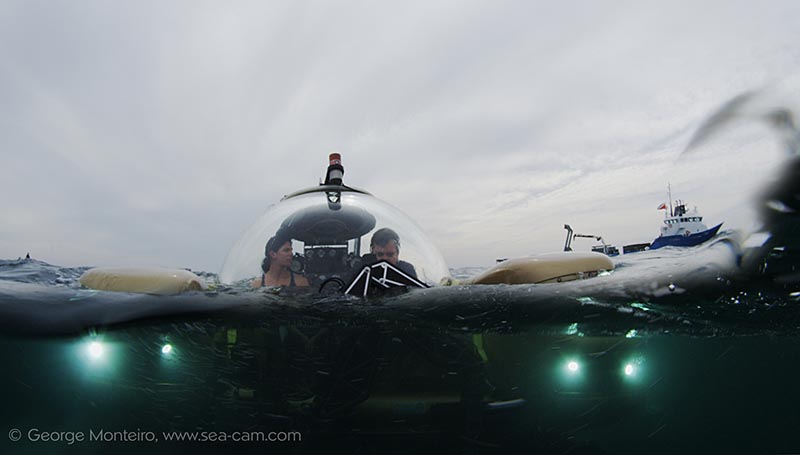
So, on March 21-22, we took action. We teamed up with Project Baseline and Philippe Cousteau, grandson of Jacques, to host a two-day event focused on the reefs at risk from the upcoming Port Everglades expansion. Over 20 news articles came out about the event, helping us to raise awareness about the importance of these corals. This is the only coral reef in the continental United States, and these corals are disappearing faster than we can study them, declining by over 80% since the 1970’s. One of the submersible dives yielded an incredible find: a rare pillar coral (Dendrogyra), which was listed for protection under the Endangered Species Act just this year. Unfortunately, this species was decimated by a recent disease event and many remaining colonies died this past summer. The colony that we found, however, is healthy and could be a hardy strain useful in conservation efforts.

The Army Corps has consistently ignored our repeated requests to update their project to include more reef protections at Port Everglades. We can’t allow that same devastation to happen again. We are telling everyone who will listen about the problems with this plan. Citizen scientists from Project Baseline will help us to continue to monitor the reefs before, during, and after Port Everglades. All tools continue to be on the table, and we won’t stop until Florida’s valuable and rapidly disappearing corals are protected.


Originally published at https://www.miamiwaterkeeper.org/submersing_ourselves_in_protecting_ft_lauderdale_s_reefs

Tags:

Get updates about our work

We respect your privacy.

Media Coverage

Stories of Accountability & Recovery

Miami Waterkeeper has been cited by local and national outlets as a trusted source on South Florida water quality, policy, and environmental justice.

The Washington Post

An Army Corps project could wipe out one of Florida’s last thriving coral reefs

March 1, 2026

The Washington Post ran an in-depth feature on the U.S. Army Corps of Engineers’ plans to dredge and widen the shipping channel at Port Everglades —…

Read more

Nautical Voice

Concerns Rise Over Port Everglades Expansion’s Impact on Coral Reefs

January 19, 2026

NV Tech Desk reported on the scientific alarm surrounding the Port Everglades expansion, highlighting a landmark study by NOAA and the Shedd Aquarium that…

Read more

The Invading Sea

Trashing our oceans: Feds plan the biggest permitted coral destruction in US history

January 8, 2026

The Invading Sea, Florida’s dedicated climate journalism outlet, published a stark account of what the Port Everglades dredge proposal actually entails: 400 underwater acres…

Read more

Support our work

We’re committed to transparency, accountability, and maximizing the impact of every dollar entrusted to us. Be part of the change and donate today!

Florida Solicitation of Contributions Registration #CH46021 A copy of the official registration and financial information for Biscayne Bay Waterkeeper (aka Miami Waterkeeper), a Florida-based nonprofit organization, may be obtained from the Division of Consumer Services by calling toll-free 1-800-HELP-FLA (435-7352) within the state or visiting www.800HELPFLA.com. Registration does not imply endorsement, approval, or recommendation by the state.