
From January to June, 1.5 million gallons of sewage spilled in Miami Dade County

Under Miami Dade County Water and Sewer Department’s federally-mandated Consent Decree agreement with the U.S. EPA and Florida Department of Environmental Protection, they are required to issue periodic status reports. The 11th status report was recently released and covers the period of January 1, 2019, to June 30, 2019.  During this period, 54 sanitary sewer […]

Back

Under Miami Dade County Water and Sewer Department’s federally-mandated Consent Decree agreement with the U.S. EPA and Florida Department of Environmental Protection, they are required to issue periodic status reports. The 11th status report was recently released and covers the period of January 1, 2019, to June 30, 2019. 

During this period, 54 sanitary sewer overflows (SSOs) occurred. SSOs are just what they sound like — sewage spills. According to the EPA, SSOs can contaminate our waters, cause serious water quality problems, can cause property damage and can threaten public health. 

The 54 overflows that occurred from January to June this year resulted in a combined total volume of 1,560,217 gallons total! Of the 54 spills, 12 were larger spills of 10,000 gallons or greater. 

These SSOs were caused by a variety of factors including contractors breaking force mains, rags and debris blocking up pump stations, and other mechanical or equipment failures. 

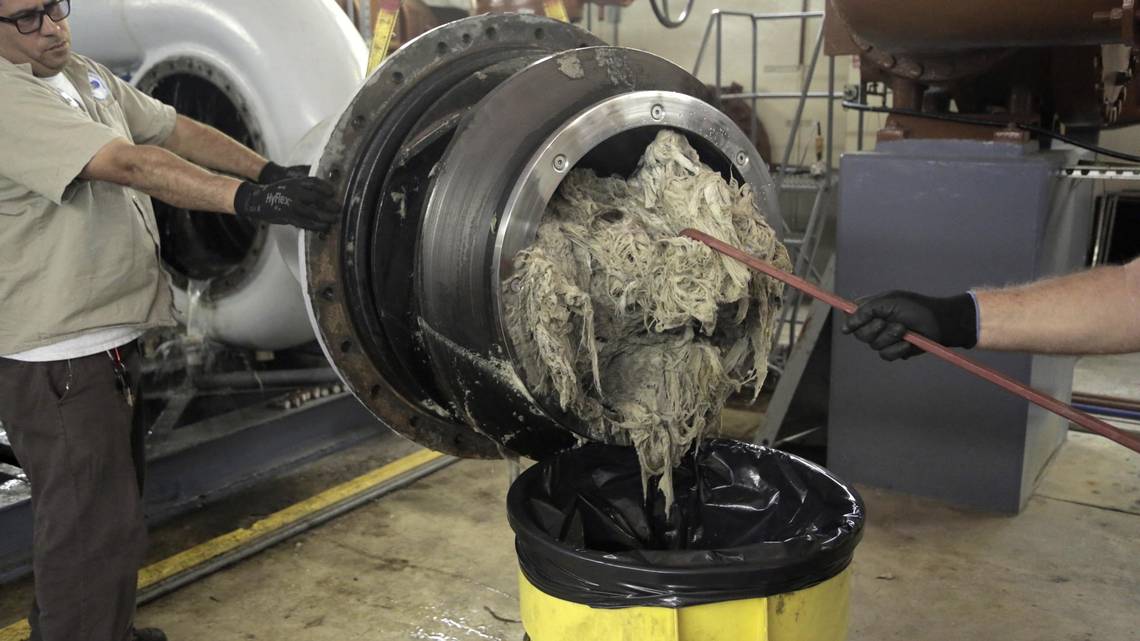
Of the 42 smaller SSOs, 20 were caused by grease, rags, rocks, debris, or other blockages. A good reminder to keep wipes out of the pipes!

The EPA found that Miami-Dade County addressed the SSOs in a timely and appropriate manner and that the Consent Decree, through its programs, deliverables, and projects, is able to adequately address the causes of these SSOs and eliminate them in the future. The next status report will review July 1st through December 31st, 2019 and will be released in 2020. 

Miami Dade County’s Consent Decree requires a $1.6 billion investment in the wastewater infrastructure of this region. But, there is still work to be done. Miami Waterkeeper mobilized this September in response to proposed budget cuts for water and sewer infrastructure. “1.5 million gallons of sewage spilled from January to June is 1.5 million gallons too many,” says Miami Waterkeeper General Counsel Kelly Cox, “Miami Dade County needs to invest in our water in the interest of public and environmental health.”

Read more about our work on clean water and sewage spills here


Originally published at https://www.miamiwaterkeeper.org/from_january_to_june_1_5_million_gallons_of_sewage_spilled_in_miami_dade_county

Get updates about our work

We respect your privacy.

Media Coverage

Stories of Accountability & Recovery

Miami Waterkeeper has been cited by local and national outlets as a trusted source on South Florida water quality, policy, and environmental justice.

The Washington Post

An Army Corps project could wipe out one of Florida’s last thriving coral reefs

March 1, 2026

The Washington Post ran an in-depth feature on the U.S. Army Corps of Engineers’ plans to dredge and widen the shipping channel at Port Everglades —…

Read more

Nautical Voice

Concerns Rise Over Port Everglades Expansion’s Impact on Coral Reefs

January 19, 2026

NV Tech Desk reported on the scientific alarm surrounding the Port Everglades expansion, highlighting a landmark study by NOAA and the Shedd Aquarium that…

Read more

The Invading Sea

Trashing our oceans: Feds plan the biggest permitted coral destruction in US history

January 8, 2026

The Invading Sea, Florida’s dedicated climate journalism outlet, published a stark account of what the Port Everglades dredge proposal actually entails: 400 underwater acres…

Read more

Support our work

We’re committed to transparency, accountability, and maximizing the impact of every dollar entrusted to us. Be part of the change and donate today!

Florida Solicitation of Contributions Registration #CH46021 A copy of the official registration and financial information for Biscayne Bay Waterkeeper (aka Miami Waterkeeper), a Florida-based nonprofit organization, may be obtained from the Division of Consumer Services by calling toll-free 1-800-HELP-FLA (435-7352) within the state or visiting www.800HELPFLA.com. Registration does not imply endorsement, approval, or recommendation by the state.