
Before joining Miami Waterkeeper, Outreach Coordinator Collin Schladweiler was part of an environmental research team evaluating air quality impacts on community emotional well-being. We are excited to announce the research Collin assisted with has recently been published in a peer-reviewed publication! Cities throughout the United States are developing initiatives supporting resilience, health, and sustainability. Scientists from the Georgia Institute of Technology, University of Minnesota, and others, developed a novel approach to determine the correlation among air quality, a person’s emotional well-being (EWB), and a neighborhood’s infrastructure.
EWB relates to how individuals feel about their lives, and it is highly associated with health and chemical balances within our bodies. An individual with high EWB would frequently experience pleasant emotions and high levels of life satisfaction. Poor health, agitation, unemployment, and lack of social contact are contributing factors of low EWB. A neighborhood’s infrastructure can influence both the health and EWB of a community through the convenience of transportation, access to employment, education, and social interactions.

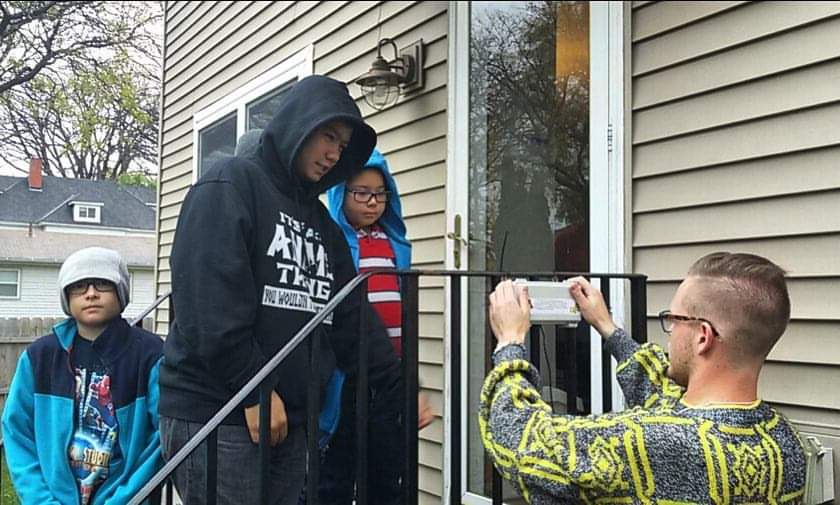
Collin served as a field technician and outreach assistant in Minnesota for this study back in 2016. His primary role involved interviewing community members among 6 selected neighborhoods, assisting in tracking the well-being of individual participants, and installing traffic-related air pollutant (TRAP) devices that monitored air pollution and collected data throughout the study areas in the geographic region surrounding Minneapolis, MN. This opportunity was Collin’s first involvement with environmental outreach work.
One of the greatest threats to human health is poor air quality, particularly fine particulate matter (PM2.5), which is a large concern for global disease and contributes to both chronic and acute adverse health outcomes. PM2.5 are small particles in the air that reduce visibility and have the potential to impact an individual’s EWB.
During the study, Collin assisted researchers Raj Lal and Kirti Vardhan Das with installing regulatory PM2.5 monitors and air quality sensors in the backyards of residents’ homes to capture the pollutant concentrations of the chosen neighborhoods. A phone application called DaynamicaTM was used to record the EWB metrics of residents. The individuals initially rated EWB through 5 emotions (happiness, sadness, stress, pain, and tiredness) on a scale of 1 (not at all) to 7 (strongly). After the entry survey, DaynamicaTM monitored user movements for 1 week. Respondents identified their activity throughout the week and filled out an EWB assessment afterward.
The study found lower socioeconomic status (SES) communities have higher PM2.5 concentrations. These communities are often exposed to higher levels of ambient pollution than communities with a higher socioeconomic status. The study showed a simultaneous assessment of EWB and higher neighborhood PM2.5, which presented a negative correlation between positive emotions, such as happiness, and a positive correlation for negative emotions (tiredness, stress, sadness, and pain). This essentially means the study shows emotional well-being is negatively impacted by higher amounts of air pollution.
The results from this research may be utilized for future policy initiatives in cities seeking to prioritize further health and sustainability initiatives among similar neighborhoods and communities. Studies such as this offer a novel approach to assess these relationships, consider environmental justice concerns and improve communities’ well-being through local intervention and rural/urban development. Thank you, Collin, for all your great work!
Click HERE to read the full study, “Connecting Air Quality with Emotional Well-Being and Neighborhood Infrastructure in a US City.”
Originally published at https://www.miamiwaterkeeper.org/miami_waterkeeper_s_outreach_coordinator_recognized_for_research_in_minneapolis_air_pollution_study