
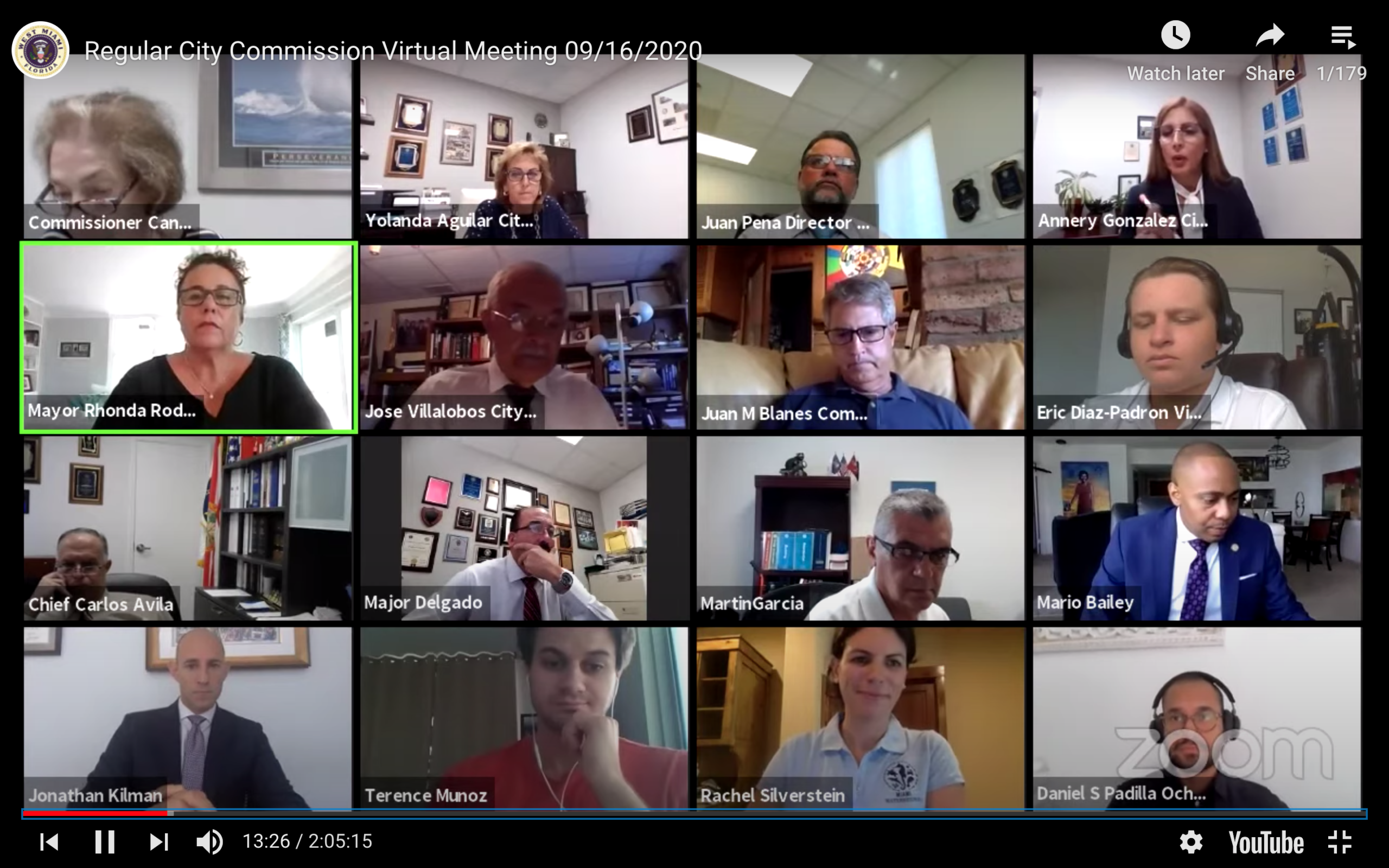
On Wednesday, September 16, 2020, the City of West Miami Commission unanimously passed a fertilizer ordinance on second reading incorporating all proposed amendments from Miami Waterkeeper. The City previously moved to pass a fertilizer ordinance in accordance with FDEP Florida Friendly Fertilizer Ordinance requirements, but Miami Waterkeeper worked with Planning and Zoning Director Juan Pena to review and propose strengthening measures to further curb nutrient pollution in our waterways. Excess nutrients, such as nitrogen and phosphorus, can enter our waterways after excessive and inappropriate fertilizer use, which can lead to algae blooms and adverse impacts to marine life and habitat.

Miami Waterkeeper Dr. Rachel Silverstein speaks in favor of amending the City’s proposed ordinance.
The City of West Miami’s new ordinance incorporates a summer ban on fertilizer application for fertilizers containing nitrogen and phosphorus, a 15-foot fertilizer-free zone setback from storm drains and waterways, a 0% phosphorus provision, and a 50% slow-release nitrogen provision for fertilizers containing nitrogen. Each of these measures is an important and impactful step to ensure a reduced likelihood of nutrient runoff into our waterways.
West Miami’s ordinance represents another water quality win as the City joins other South Florida cities including the City of Miami, Key Biscayne, and North Bay Village in passing a strong fertilizer ordinance. City of West Miami Mayor Rhonda Rodriguez thanked Waterkeeper members and affiliates for taking the time to speak in favor of Waterkeeper’s proposed amendments “for Mother Earth!” Thank you, Mayor Rodriguez and West Miami Commissioners for taking this monumental step to champion water quality in and beyond West Miami.
The City of Miami Beach Commission also unanimously passed a strong fertilizer ordinance on first reading on Wednesday with Miami Waterkeeper’s support. The ordinance will not be voted into law until the second reading, which is slated for the October Miami Beach Commission meeting.
In light of the August fish kill in Biscayne Bay, passing a strong fertilizer ordinance is one of many measures municipalities can undertake to improve water quality and address nutrient pollution. Nutrient pollution comes from many sources including failing septic tanks, aging sewage infrastructure, and dirty stormwater runoff.
Reducing fertilizer runoff addresses just one piece of the nutrient pollution puzzle. And without a county-wide ordinance, many areas of Miami-Dade County are left vulnerable to excess nutrient pollution caused by fertilizer runoff. Wondering if your municipality needs a fertilizer ordinance? Read more about our model ordinance and fertilizers HERE. Find more information about what elected officials can do to improve water quality by accessing our Policy Recommendation Guide HERE.
Originally published at https://www.miamiwaterkeeper.org/city_of_west_miami_unanimously_passes_water_quality_win