
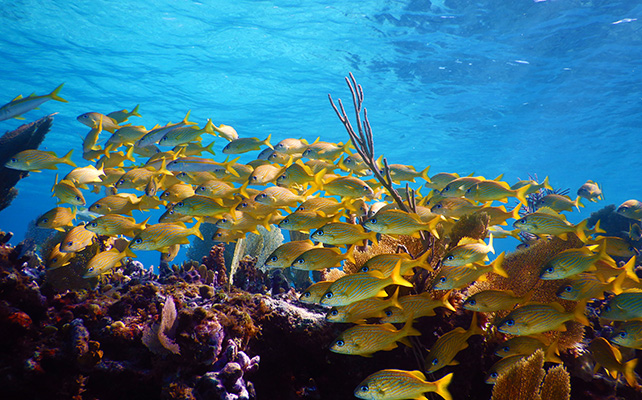
Protecting Florida’s Coral Reef
Florida’s coral reef is an ecological jewel, providing habitat for thousands of marine species and serving as a natural barrier against storm surge, reducing wave energy by an average of over 95% — more than $600 million in coastal protection benefits for South Florida — while supporting tourism, recreation, and fisheries.
Since 1970, South Florida has lost 90% of its coral cover, with even greater declines in recent years from dredging and disease. While systemic threats like warming oceans, pollution, ocean acidification, and disease play a major role, local—and preventable—catastrophes, including shipping canal dredging, have caused significant damage. Miami Waterkeeper is committed to addressing the harm from past dredging projects and preventing future reef destruction.
Where Are Corals & Florida’s Coral Reef
Corals are living animals closely related to jellyfish and anemones. Stony corals, often mistaken for rocks, are made up of millions of tiny polyps that build calcium carbonate skeletons. These colonies form complex structures that support some of the most biodiverse ecosystems on Earth.
Florida is home to the only nearshore barrier reef in the continental U.S., stretching from the Biscayne Bay region down to the Keys. This reef provides habitat for thousands of marine species, shields the coast from storm surge, supports fisheries, and sustains tourism.
Corals require specific conditions to thrive—clear water, stable substrate, tropical temperatures, and moderate wave energy—making them highly sensitive to disruptions such as warming oceans, sedimentation, pollution, and dredging. Protecting Florida’s coral reef preserves both natural biodiversity and the economic and cultural value it provides to South Florida communities.
A Dredgeful Situation: The Dredge at PortMiami
Dredging and expansion at PortMiami caused severe damage to nearby coral reefs, killing millions of corals and destroying critical habitat. Miami Waterkeeper has successfully filed multiple, successful legal actions to protect corals and published peer-reviewed studies documenting the impact of dredging on Florida’s coral reef.
published peer-reviewed studies documenting the impact of dredging on Florida’s coral reef.
Stop the Port Everglades Dredge, Save the Reef
The largest permitted coral destruction in U.S. history is planned at Port Everglades, threatening over 10 million corals. Miami Waterkeeper is advocating to stop the dredge and prevent repeating PortMiami’s devastation.