
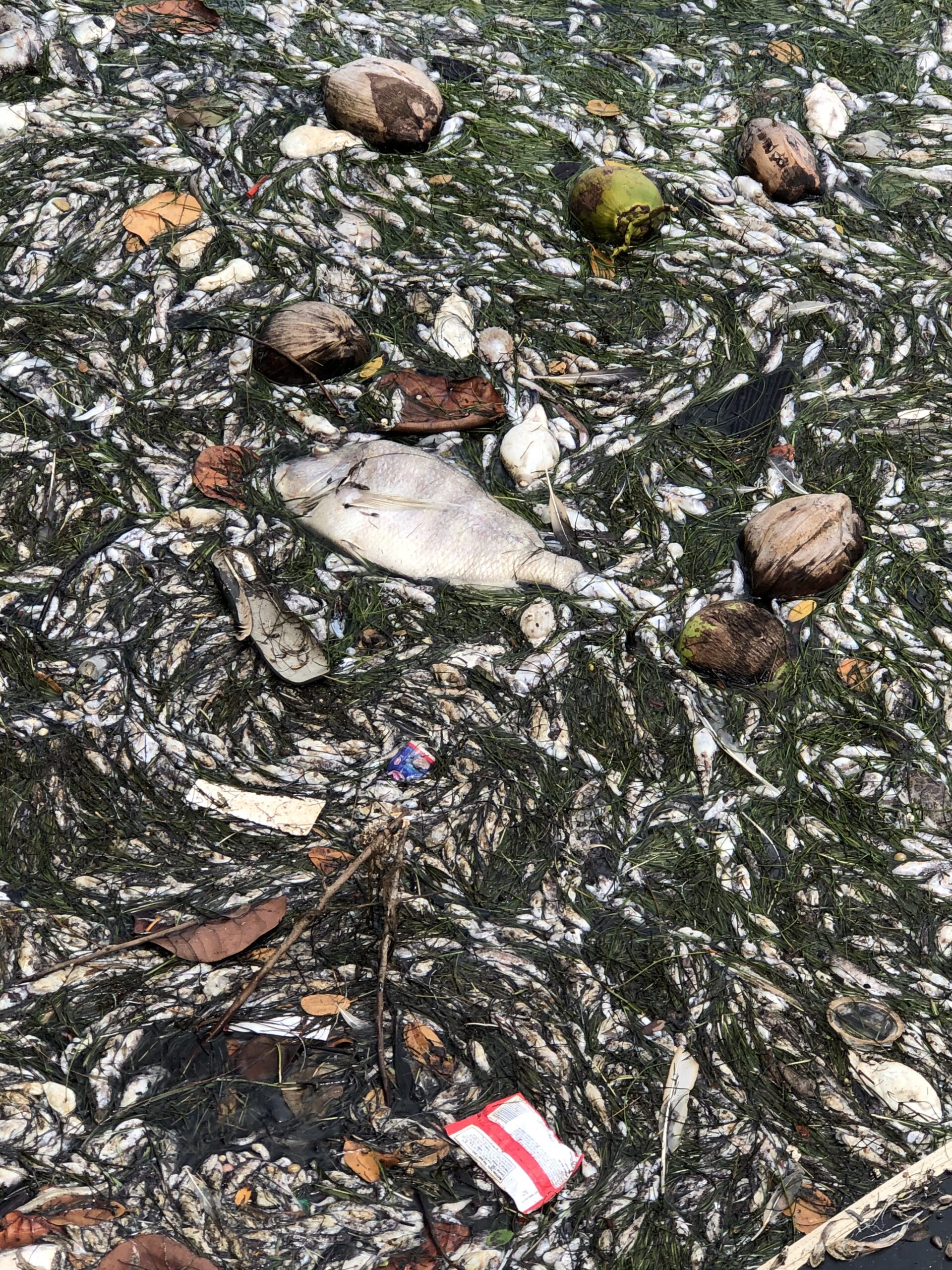
In August 2020, as a response to the fish kill in the northern Biscayne Bay, Miami Waterkeeper invited all groups involved in Biscayne Bay scientific research, including local municipalities, universities, organizations, and Federal, state, and regional agencies, to share observations and data. Meeting daily as an ad-hoc group of interested parties during the initial fish kill crisis, the group transitioned into weekly meetings and now meet on a monthly schedule. From this informal gathering, the Biscayne Bay Science Coordination (BBSC) group was formed.
The BBSC has identified increased monitoring in northern Biscayne Bay as their top scientific priority. The group has identified research priorities for Biscayne Bay, including the following research goals:
- Understand baseline conditions in northern Biscayne Bay
- Develop data collection on the northern Biscayne Bay fish population
- Develop a network of ongoing, in-situ monitoring, preferably real-time
- Initiate full water-column sampling for environmental parameters
- Initiate canal monitoring including chemical constituents, environmental parameters, and flow
At the one-year anniversary of the fish kill, Miami Waterkeeper is releasing a Fish Kill Report with input from BBSC group partners. The report is designed to capture observations before, during, and after the fish kill, with the intent of developing baseline knowledge to understand the causes of the 2020 fish kill and to explore possible future work and recommendations that could prevent similar events. You can read the report here.
Additionally, the group reviewed lessons learned from the fish kill event and gave input to streamline community response plans in the event of a future incident. You can read the Fish Kill Response plan here. This group is open to anyone interested in participating in data-based discussions about scientific research priorities for Biscayne Bay. If you would like to join the meetings, please contact [email protected].
Originally published at https://www.miamiwaterkeeper.org/introducing_the_biscayne_bay_science_coordination_group